Catrina's Garden

A place for gardeners, foodies and garden inspired artists.

Care and Culture of Iris

MDB Iris Wood's

MDB Iris Wood’s

There are many types of Iris. This article will focus on the types of iris that grow from rhizomes. They can be different in their size; from miniature to tall bearded, but what they have in common is the rhizome.

Planting your new Iris

Iris Neglecta (3)1Irises are really tough. In fact you will sometimes see them growing on old farmsteads long after the buildings have crumbled to rubble. Iris will thrive in most types of soil but the main key to healthy irises is drainage. Planting on a slope or in a raised bed can improve drainage if you have heavy soil. You can add course sand or compost to improve your drainage also. The ideal pH is a slightly acidic 6.8 but they are not too fussy about this. Please don’t attempt to adjust pH with lime of sulfur unless you have had a soil test that tells you how much to add. You can easily add too much.

1Iris Beverly Sills (2)It is best to plant new iris after they have bloomed. This is why we prefer to ship your iris in July, August or September. We sometimes bend the rules on this to save on shipping if you are ordering other types of perennials and want to save on shipping. Moving iris after bloom is really best for the plant though, and also, if we ship after bloom then we can be absolutely sure that we are sending you the right plant. We don’t recommend moving iris later than September because they must get their roots set before winter sets in, or they can easily be heaved from the ground. If you live in an area with very mild winters we possibly could extend shipping into October. They should be planted at least 6 weeks before the first hard frost in your area.

Light

Iris need at least 6 hours per day of full sun in order to bloom well. Even more is better, but some shade may help if you live in a very hot climate.

Iris RhizomesWhen planting Iris, the top of the rhizomes should be exposed and the roots should be spread out and directed down into the ground. They should look like this:

If you live in a very hot area or have very light soil you could put a little soil over the rhizome; no more than an inch. Firm the soil to remove air pockets and then water well. Plant your iris about a foot apart. You could put them a little closer but you will have to thin them sooner.

Iris Wabash, Mme Henry Cayrux and Grandma Bass

Iris Wabash, Mme Henry Cayrux and Grandma Bass

Watering

Irises that have just been planted should be watered frequently until their roots are established. After they are established, it is better to water deeply, less often than to water frequently, but shallow. Really, unless you live in a very dry area or are having a bad year, iris do not need supplemental watering. If you over water they could rot.

MDB IrisBoo

MDB IrisBoo

We do not fertilize our iris, but if you do wish to fertilize use a low nitrogen fertilizer. This would mean that the middle number should be higher than the first number. If you use high nitrogen fertilizer you will be rewarded with nice leaves at the expense of flowers. It is, however, normal for them not to bloom well the first year after transplant.

Caring for iris

Iris I Do

Iris I Do

Iris can live nearly anywhere because they are very tough plants, but they will do the best if you keep their beds weed free and remove debris that lay on top of the rhizomes. If you use mulch, keep it off the top of the rhizomes, and as it decomposes, check to see if the rhizomes need to be lifted a little to keep them at surface level. Sometimes I use forks to do this by going underneath, without completely digging up the plant…just lifting it and pressing it back down.

Cut off the bloom stalks down to near the ground when all of the buds are done. Remove individual flowers and branches as they finish. Don’t cut the leaves if they are healthy looking. Do cut if they are browning or showing insect damage or leaf spot. In fall trim them to around 6 inches. Irises do not need winter mulch when they are established. If you live in the far north they could benefit the first year as their roots may not be as well established. If you do it use something like straw or evergreen boughs that will allow air circulation rather than something like leaves that will pack down and become a wet mess. Wait to apply winter mulch until the ground is frozen. Remove any winter mulch in fairly early spring.

Iris MDB What AgainThe biggest problem that Irises can have is rot. The best treatment is prevention. Make sure the soil is well drained and debris is removed. This will prevent them from being too wet and prevent rot. If you do get some rot it is important to remove the rotted part right away. You can stick a serrated knife right in and cut it away, or try a spoon. Sometimes it is necessary to dig up the rhizome. Irises put on new growth each year so the “old part”, the part that is away from the leaves, may eventually shrivel up or rot. Remove these spent “middles” if they are no longer firm. If you have the plant dug up, allow the fresh cuts to dry for a few days before replanting.

Iris Alene's other love

Iris Alene’s other love

Dividing

Overcrowded irises stop blooming. Depending on the variety and the growing conditions, Iris may need to be divided every 4 or 5 years. They are also more likely to have rot problems if they are crawling on top of each other. Please refer to “planting” above for when and how to divide. I like to leave “forks” (one rhizome with to leaf clusters) attached and if there are small side shoots leave those attached to the main rhizome.

Bring the colors of the rainbow to your garden with these classic and care free  beauties.

To read “All About Bearded Iris” Click here.

To view all of the irises that are available through Catrina’s Garden click here.

Moss Rocks!

Moss (2)1I often hear gardeners bemoaning the fact that they have moss in their gardens. I will have to say I really don’t get this sentiment. I love moss. It brightens up your garden in early spring with its lush bright green appearance, and softens the edges in your rock garden all year round. Moss gives your garden a rustic, aged appearance.

There are thousands of varieties so if you would like to “encourage” your moss you could end up with a beautiful patchwork, displaying different shades of green and maybe some yellow, blue or even red.

When I can I use bricks and or rocks Moss (6)1that already have moss on them, but I find that if you put a few bricks in a shady area that already have the moss it will spread to the ones that don’t.

It is pointless to try and kill moss and grow grass. Just give up please. If you have moss it is too shady for grass. Either learn to love the moss or plant other shade loving plants…like hosta. If you must grow grass in that spot, you need to look at the reasons why grass won’t grow there. Don’t try and kill the moss. Instead try and make the grass grow better.  These are the most likely reasons why your grass is not growing well.

  • Compacted soil – Is the moss growing where you usually walk or drive? Maybe you should aerate or work up the soil and then put a path or stepping stones there.
  • Too much moisture – let me guess the moss grows near your downspout or where your hose faucet is. The answer is to improve drainage or how the water runs off.
  • Too much shade – you can increase the sunlight by pruning trees and shrubs but if it is the shade from your home there is not much you can do.
  • The soil is too acidic – you could try adding a little wood ash, but be careful. It would be best to get a soil test and then they can tell you exactly how much to add. It’s easy to add too much and then you have a bigger problem where nothing will grow. It’s not so much that moss likes acidity but that grass doesn’t. Moss grows fine in neutral soil.

Moss (5)1There are places where even I need to kill the moss. Here is an example: this is my front walk. I don’t mind the way it looks on the cobbled sidewalk, but it is a slipping hazard.

The safe method that I use is to sprinkle plain old baking soda in the area where the moss is not desired. It is safe for humans, insects and most plants. Wood ash works too but be careful not to wash it into your garden. Both of these work by changing the pH. Wood ash is stronger. Baking soda can even be used on the roof and then the water used to water plants; even edible plants. If it is not a large area you could also try using boiling water or a pressure washer. Since this is “only water” it is also safe for garden creatures and plants.

Most moss killers contain copper, zinc or iron which can be toxic; especially to fish and aquatic life, but garden plants and insects won’t be happy either. Many sources recommend using bleach or vinegar. Vinegar is a little safer, but it will kill nearby plants by changing the pH too much. Chlorine bleach is incredibly toxic to nearby plants, soil life, amphibians, and human lungs. Did you know it was used in WWI as a deadly weapon? When it breaks down it forms cancer-causing dioxins.

If you want less moss in the actual soil of your garden beds, just add compost. This will balance the Ph of your soil and help the change the composition of the soil from fungal (which is what moss likes) to bacterial. It also works by making the surface of your soil uneven which is why mulch will also help in gardens.  Moss likes to grow on flat surfaces. Remember these guys are tiny a stick or acorn lying on the ground is like climbing up a mountain for them. Increasing light and air circulation in the area will also help decrease moss.

Moss (3)1So enough on how to get rid of moss; what we really want to talk about is inducing you to like moss in the right situation. Don’t automatically kill it. Really, it can be very beautiful.

Moss1

sun loving moss

So what should you do to grow moss? Well, you don’t really have to do anything. Moss happens in the right conditions. There are even certain types of moss that will grow in the sun. Basically, all you need to grow moss is other moss. It will help if the surface that you want to grow moss on is smooth and free of weeds. You can place slabs of moss where you want it to grow. Pat it down well, and if you have a large area to cover and just a little moss to work with you can break it into pieces and let them grow together.

Moss needs moisture to increase but not to stay alive. Some mosses even require dry periods to do well. If you are trying to get moss started (as opposed to just letting it happen) you should keep the area a little wetter than you would your normal garden, but once moss is established you will not need to water it any more than the rest of your garden. Moss does not need deep watering, just a light mist every so often, because it doesn’t have roots. It actually requires a lot less water than grass.

Moss and semps (2)1So, what exactly is moss? Like a fern, moss grows from spores. The spores develop green threadlike structures called protonema instead of roots. They push into the ground a little or attach to surfaces but they serve only as anchors and do not take up any nutrients or water. If you are collecting moss to grow in your garden try to get some of the dirt attached or in the case of rocks scrape with a sharp blade so that you break off fewer of the protonema. Mosses eventually develop a tiny flat leave. Moss is actually thousands of plants growing together rather than one big plant that makes up a matt. Moss gets everything it needs from the air which is why it can grow on rocks…cool right?

Moss (7)1So what about this pH thing? Well, moss is not particularly fussy about this. They do fine on most soils but prefer a slightly acidic soil. Most moss will not survive if the pH is higher than 6.5.

Contrary to popular belief buttermilk does not help moss grow. It can actually mold and then not smell very nice. Water works just as well. Mosses do not Moss and semps (4)1use nutrients so the idea of feeding it with buttermilk, beer or other liquids is simply false. Moss is easy to grow which is why this method sometimes works for people. You are better off using “pieces” instead of putting it in a blender which is sometimes recommended. Then use anything that will help the moss stick to the surface where you want it to grow. Mud works well. The most important factor is Moss and semps (3)1that the moss is firmly touching the surface where you want it to grow. So if you want to grow moss on a vertical surface like a pot or a wall it is best if you can lay it horizontal until the moss attaches. This is why methods like buttermilk (or mud) may work, because it helps the moss stick instead of falling off. “Sticking techniques” are not necessary for horizontal surfaces.

Moss and semps1Spring is the perfect time to enjoy the moss in your garden. It is in fact one of the stars of the season before your other plants begin to fill in. Please, don’t think of moss as a weed. Instead think of it as the little runt, the underdog, which takes an opportunity where it finds it and ends up succeeding famously.


More Early Spring Bulbs

I talked about my favorite early spring bulbs on Sunday. Since then the snow is melting and the sun has come out. They are so cute that I just had to show you some more. This is a gallery so just click on one of the photos and then click in the grey area when you are finished.

To read the article that goes with these pictures click here.

Read about two of my favorite spring flowers: heartsease and pasque flower.

Keep Deer From Eating Your Garden

White-tailed Deer (Odocoileus virginianus). Minnesota, USA

White-tailed Deer (Odocoileus virginianus). Minnesota, USA

With spring really warming up we are seeing more deer in the garden.  I actually see the doe bringing her young into my garden and teaching them what is good to eat. Are you tired of your plants looking like this?

Daylily bitten off by deersmThere are a number of strategies that you can employ.

  • A tall fence – This would be the best, but I still haven’t been able to afford it. The fence must be at least 6 feet tall to keep deer out.
  • A big dog – This works, but the dog must be well trained. You don’t want them chasing the deer, especially if you do it outside of your property. Our dog is gone now, but we trained her to circle the edge of the property a few times a day and let the critters know she was there. Then even when the dog is in the house the deer become more wary…We really need to get another dog.
  • Plant resistant plants – notice the word resistant…not that this is sure fire plan. They will taste almost anything. Deer love daylily and hosta. Here is a nice list of resistant plants from Cornell University.
  • Long border 2013smAnother technique that I use that seems to help is the old over stimulation technique. I inter-plant (thickly) my nice plants that the deer like to eat with taller, less appealing plants. For example in my daylily border I have the nice yummy daylilies and other plants that they like in the front and or center of the garden. Along the back where the deer tend to enter I have a lot of tall prickly plants like rudbeckia and other tall natives. They will still come and nibble, but they usually try the tall stuff first and then go eat in the field when they don’t like what they are getting in their first few bites. It’s not fool proof but it helps.
  • Try a repellent. There are commercial repellents available. The one that has worked the best for me is plantskydd. Here is a link to their website: http://www.plantskydd.com/ . This product was developed in Sweden. It contains no synthetic additives, is non-toxic and is not harmful to animals, plants or the environment. Its main ingredient is dried blood but it has ingredients that bind it to the plants so that it won’t wash off.  Another bonus is it that is serves as a foliar fertilizer.
  • If you would like to make your own here is a recipe that I have tried that seems to work. The eggs and oil help it stick to the plants to some extent but it is best reapplied after a rain.

deer what cha gotCathy’s Deer repellent

  • 3 raw eggs
  • 3 tbsp. hot sauce
  • 3 tbsp. garlic juice
  • 3 cups water
  • 2 tbsp. cooking oil
  • 2 tbsp. dish soap
  • 1 bunch green onion tops
  • 2 Beef bouillon cubes


Early Spring Flowers

Crocus yellow (5)1I’m up early on Easter morning. The snow outside makes it seem like it is still winter, but I’m dreaming of warm, soft breezes and signs of spring.

After the winter it’s natural to look toward the rebirth of spring. Many consider the crocus to be the first spring flower, but there are lots of little bulbs that bloom even earlier.

These little bulbs are sometimes called the “minor bulbs”. They are usually very small. But they can be just as effective as the larger flowering bulbs that come later, like tulips and daffodils. The key is to plant them in mass. Sometimes just one or two here and there are nice too; kind of a little surprise when you take the time to look.

Snowdrops (2)1Little beauties like crocus, snowdrops, glory of the snow and early spring iris are especially important because they give the gardener that little reminder that “spring is coming”, when they need it the most. They effectively extend the season to a time that, here in Wisconsin, sometimes even still has snow on the ground giving us a “jump on spring”.

Just like the later blooming daffodils, the little spring bulbs needed to be purchased and planted in fall. There is always next year; my favorite garden saying. Really, you can plant them any time up until the ground freezes. I think they are easier to plant than the large bulbs because they don’t have to go down as deep, usually about 3 or 4 inches. You can even plant them on top of the other bulbs to save garden space.

Crocus with snow (3)1The biggest mistake that I have made with these little gems is not getting them uncovered early enough. We live in a maple grove so we get a very thick layer of maple leaves in the garden. If you don’t get the leaves off early enough the little cuties will bloom under the leaves and you will never see them. Or, if they do manage to poke their little heads through the leaves they will become spindly and won’t last as long. If you then decide to get the leaves off, when you remember them, you will sadly end up tearing them apart. In recent years I have made a better attempt to get most of the leaves off in fall. It’s a good excuse to get out there and get some exercise. You have to do it sooner or later, and really, don’t you have enough to do in spring? Then in spring it is an easier clean up, really just a touch up to get the ones that blew in over the winter, and you can concentrate on the areas where you know the little bulbs are coming….that is if they aren’t still covered with snow.

Snowdrops with snow (5)1Speaking of snow, don’t worry if they get dumped on. They are used to it and they can take both snow and cold temps. They just close up and wait until the sun comes out again.

Early spring bulbs enjoy sunlight, but it will be fine if you plant them under deciduous trees because they will not have leaves at this time of year.

One other thing to remember; just like the bigger bulbs, don’t remove the foliage when they are done blooming. They need this to store energy for next year. Don’t worry; the rest of your garden will start to grow and you will forget all about them. If you have your bulbs naturalized in the grass, wait a week or two longer to mow the first time. Your spring bulbs will reward you for it. Many times when planting another perennial I dig them up by accident. This is not a problem, just replant them. It probably will help increase them as after they have been in the ground for a few years they tend to grow in clumps.  This way you can divide them.

So let’s look more closely at some of my favorite “minor bulbs”:

  • Scilla mischtschenkoana (2)1Glory-of-the-snow -Chionodoxa luciliae

Glory-of-the-snow comes in blue, white and pink. They are very hardy (zone 3 to 8) and are perfect for naturalizing, along the edge of the border or in rock gardens. The flowers are star shaped with a white or light yellow center. Bloom time is usually late March here in Wisconsin and they only grow to about 4 to 5 inches. The white and pink varieties will be a little taller; up to 8 inches.

  • Snowdrop – Galanthus nivalis


Snowdrops1Snowdrops seem to be on their own schedule. If you get a warm snap they may bloom earlier some years than others. Further south they may bloom in January but it is usually late February or March “up-north”. The stems of the common variety are about 4 inches but there are also some slightly bigger varieties. They have solitary, drooping, white flowers with green spots. Plant them near a walk or on a raised bed. Somewhere that you will notice them popping through the snow. It is amazing to see these frosty-white beauties on a sunny, but still cold and snowy afternoon.

  • Dwarf Iris 

There are lots of types of Dwarf Iris and most of them do grow in early spring; some earlier than others. The genus “Iris” was the name of the Greek goddess of the rainbow. I’ll briefly tell you about some of my favorites. As with most early spring flowers they are small; some only 3 inches and most under 8 inches.

Iris cristata is one that steals my heart. This is a native wildflower that spreads by undergrIris Cristata1ound rhizomatous stems. There are different varieties ranging slightly in size and they come in colors from purple to blue to white. They have yellow crested markings…so cute, and are super hardy and carefree. The rhizomes should be planted near or at the surface just like their larger cousins. Mimic their natural wooded habitat, which includes moist, well-draining soil and iris cristata will be happy. Adding a little leaf mold will make them sing.

Iris Reticulata (2)1Iris reticulata is another cute easy to grow miniature iris. These little ones can be purple, white or yellow. Their foliage is grassy. It will grow a little taller after the flowers fade. Lightly-scented flowers are usually violet to purple, although white, yellow, and light-blue cultivars are available. Foliage is delicate and grassy. They multiply rapidly and are excellent for rock gardens and sunny borders. The reticulated iris group consists of a number of small bulbous irises whose bulbs have netted or reticulate bulb coverings (tunics) on the dry bulbs. All species of Katherine Hodgkin Iris1reticulated iris are native to western Asia. Iris reticulata (purple) and Iris danfordiae (yellow) are two of most commonly known species in the reticulated group. My favorite from this group ‘Katherine Hodgkin’ is a reticulated iris hybrid, whose parents are Iris winogradowii (pale yellow flowers) and Iris histrioides (pale blue flowers). Intricately marked pale blue flowers of this hybrid have distinctive deep blue veining with a purple-spotted yellow blotch at the base of each fall. This hybrid was introduced in 1958 by E. B. Anderson and named after the wife of rare bulb enthusiast Eliot Hodgkin. These bulbs tend to generally decline for me. I think there are 2 possible reasons. First many of them, including Katherine, are listed as zone 5. They do however live through the winter and multiply in many years. Or, possibly it is because they don’t like to be wet in summer. They like it moist in spring but then need dry conditions or they will not multiply.

Miniature Dwarf Bearded Iris (MDB) is another favorite of mine. Though they are not really common, there are hundreds of varieties. This is one of the more recent things that I have been collecting, so watch for them to become available from Catrina’s Garden in future years. They are just like the large Standard Dwarf Bearded Iris except that they grow no taller than 8 inches and bloom earlier. Some are only 2 inches tall. Here in WI they bloom in late March or early April. MDB iris does best in climates that are cold in the winter. They are great in rock gardens or raised beds. It is nice to have them raised a bit so that you can smell them, because many of them are fragrant. Here are some of my new babies (click on a picture to see a slide show then click in the gray area to return):

  • Crocus

Crocus Purple 121Crocuses are among one of the most popular of the early spring bloomers. There are many different species and cultivars but there are 3 main groups: C. chrysanthus (Golden Crocus), C. vernus (Dutch Crocus) and the third group is varied types of botanic species crocus. There are Crocus species that flower in autumn also. This is the type of crocus that saffron comes from. Golden crocus are very small and flower the earliest. Dutch crocus have larger flowers that are later and tend to be more pastel. This is the most common type. They naturalize nicely, or can be grown in the rock garden or somewhere that you will see them often. Crocus come in a wide range of colors from different shades of purple, blues, pinks, Crocus White (4)1whites and yellows. There are even striped crocus. The foliage is grass like and some species have a silver strip down the center of each blade. They are actually corms rather than bulbs. Be sure to plant them with the point up and the roots down. Well actually even if you plant them upside down they will adjust. Crocuses love cold climates like zones 3 to 7 and will not do well where it is hotter. They like to be in the sun and will actually close up when it is cloudy. They do best in a sandy or gritty soil; something that will drain well. Animals like voles and mice will sometimes eat crocus. If you have a problem with this planting them away from the house or in areas without a lot of cover may help. Some people that have real problems with this put them inside little wire cages under the ground.

  • Siberian Squill – Scilla Siberic1Siberian Squill – Scilla SibericScilla is one of the earliest spring flowers to bloom. Flowering for a remarkably long time they bear clusters of bloom spikes that offer scented deep, true blue nodding bell shaped flowers. Theay are exquisite when planted under spring flowering shrubs such as forsythia, azaleas, rhododendrons, and magnolias. They are also one of the easiest bulbs to naturalize because the foliage matures quickly and is not as sensitive to mowing. They will eventually form large drifts in your lawn because they multiply by seed as well as the little bulbs producing offshoots. They tolerate more shade and a wider range of soil conditions also. You may find them popping up in unexpected places once they are established in your landscape because birds spread the seed.

Crocus with snow (2)1This time of year it seems we can have it all. I enjoy skiing and our ski hill here is still open, and the conditions are amazingly good, but we can also enjoy these little “signs of spring”; just about the time that we begin to think that winter will never end.


More pics of Early Spring Bulbs,

Two more early spring beauties: Heartsease and Pasque Flower

Pasque Flower for Easter

Easter is tomorrow. Let’s remember that the resurrection is for the garden too. Spring brings the waking of the natural world after the dead of winter. The tradition and symbolism associated with Easter in the Northern hemisphere is very much a spring festival, and we think of the Christian resurrection, but also of life and rebirth in general.

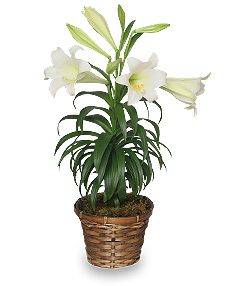
Easter LilyThe Easter Lily

The Easter lily is the most popular Easter flower in America. Millions are grown each year. They are usually forced in greenhouses to assure that they bloom at the right time. Long before the advent of Christianity, the Lily was considered a symbol of life and was associated with various goddesses of fertility. For Christians, the white lily stands for purity, and the Easter lily has become a symbol for us of the resurrection of Christ. The most commonly grown lily, that is called “Easter Lily” is the Bermuda lily (Lilium longiflorum). However, other white cultivars are also grown as Easter lily. In many areas you can plant your lily outside Lily regale (tetraploid)1after it has served as an “Easter Lily”. In future years it will not flower at Easter time. I guess I don’t personally care for Easter Lilies, and they are not hardy here in far northern Wisconsin. We did, however, have them growing in our garden when we lived in southern Wisconsin. Here is my “Easter Lily”; it is the “Regal Lily” (Lillium Regale). It is much taller than everyone else’s “Easter Lilies” at about 4 feet and has a pink cast. It blooms in late July, not at Easter time. The original “Easter Lily” was probably the exquisite Madonna lily (Lilium candidum), which grows wild in the Mediterranean, but not in Wisconsin. Madonna lily looks a lot like our modern Easter lily but it also is a lot taller.

Pasque flower white (2)1The Pasque Flower

The pasque flower is another plant closely associated with Easter. It is from the genus Pulatilla, which is sometimes considered a subgenus of the Anemone. The pasque flower blooms in the spring and its name comes from the French word “Pasque” which means Easter. It has also been known as the “pash flower” or “passion flower”. Although it is more obscure; for me, this is the best flower for Easter.  It blooms naturally at this time and is fully hardy. There are native and hybrid varieties from Europe but there are also closely related North American natives. The botanical name also has references to Easter, the genus, Pulsatilla, means “beaten” (as in Pasque Flower1beaten by the wind, or “wind-blown”). This may refer to the way that the wind treats these early flowers, but it also reminds us how Jesus was treated. Meanwhile, vulgaris means “common.” European and hybrid varieties can be lavender, dark purple, reddish-purple, cream or white.

Pasque flower or Pulsatilla vulgaris is a member of the buttercup family (Ranunulaceae). Closely related is Pulsatilla Patens (sometimes classified as Pasque flower - Pulsatilla1Anemone Patens) this is the one that is native here in North America. Patens means “spreading”.

It is perennial and grows to only about 8 inches high. Pasque Flower forms a clump that spreads over time, but not quickly. This little beauty is found across the Great Plains and into Alaska and Siberia. The solitary flowers come up first from each basil cluster. There are 5 to 8 petals which are not actually petals but “sepals”. They are fuzzy on the outside but not on the inside. They can be lavender, blue or white. The Pasque Flower 21pistil terminates in what looks like a purple fuzzy button. The color may vary according to the flower color.

This is surrounded by 150 to 200 stamens with yellow anthers. My favorite thing about them is that the leaves, stems and undersides of the flowers are covered with silky hair. These “fuzzy” plants then develop beautiful wispy seed heads that are as nice if not nicer than the flowers.

Another bonus with pasque flowers is that animals like Easter bunnies and deer Pasque Flower 41don’t eat them. There are not very many flowers that bloom this early. Snowdrops, crocus and other spring bulbs compliment the pasque flower and the Lenten rose or hellebore actually precedes it, blooming even earlier than Easter. There is something special about those first flowers to greet you in spring after a long hard winter.  Sometimes they even bloom through the snow here in Wisconsin.

Plant Pasque flower in full sun to part shade. It likes well drained sandy or loamy soil.

Pasque Flower - Pulsatilla patens (2)1The plant is now generally considered to be poisonous and is not recommended to be used externally either as it will raise blisters on the skin. It was, however, used in the past by Native Americans to induce labor and for skin lesions and arthritis. Other medicinal uses are also mentioned by various sources.

Pasque flower is sometimes confused with Prairie Smoke (Geum Triflorum). The seed heads look similar but are more reddish than Pasque flower and the flowers are also reddish.


Easter’s coming makes me think of all these flowers popping out. As Christians

Prairie Smoke

Prairie Smoke

celebrate the resurrection of Christ we also mark the return of spring. With more than a foot of snow falling on Holy Wednesday this year it will seem more miraculous and more to be celebrated this year than ever. The flowers were peaking up before the blizzard so when spring finally comes – as soon it will – it will truly seem like a rebirth.

Click here for Early Spring Flowers

For Early Spring Bulbs Click here

Heartsease a favorite spring flower.

The History of Basil

basil used for embalmingSome ancient cultures considered basil a magnificent, royal or kingly herb.

Some say “Basil” is derived from the Greek word basilikon for “royal.”

As a passport to help the deceased to enter Paradise, basil was used as a botanical in embalming bodies. It was found with the mummies of ancient Egypt. Perhaps because of its embalming usage, basil was also a symbol of mourning.

Basil in Ancient Chinese MedicineMost likely basil is native to India, but there are some indications it may have originated even farther east. Ancient records from 907 A.D. indicate sweet basil in the Hunan region of China where it was used medicinally.

It migrated westward as whole plants, since it could be grown easily indoors away from frost exposure. Basil is also known as St. Joseph’s wort.

Basil is a member of the large mint family. It is known botanically as Ocimum basilicum.


Basil lore and legend

BasiliskOthers say the name Basil was derived from Greek mythology.  It’s named after the terrifying basilisk, a half-lizard, half-dragon creature with a fatal piercing stare. The basil plant was considered to be a magical cure against the look, breath or even the bite of the basilisk.

Possibly because of this association with a mythical “lizard”, basil is considered a medicinal cure for venomous bites. It is not however documented as an actual cure for snake bite.

roman sowing basilIn keeping with its hostile status, later Greeks and Romans believed the most potent basil could only be grown if one sowed the seed while ranting and swearing. This will give you an excuse if you misbehave while planting your herb garden. In French; semer le baslic (sowing basil) means to rant.

In Greece today, basil is used in certain religious rituals as a symbol of fertility.

Basil used to make a scorpionIn medieval times, it was thought that scorpions came from basil. Legend says to acquire a scorpion, one should place a few basil leaves under a flowerpot and after a while, the pot would be lifted to expose a scorpion.

Goddess-TulasiIn India, basil was consecrated to the Hindu god, Vishnu, whose wife Tulasi (also known as Tulsi) was said to have taken the form of basil when she came to earth. Hindus avoid harming basil plants, unless there is a good reason, and even then offer up prayers of forgiveness for touching a part of Tulasi. Interestingly enough, tradition requires the head of a Hindu be bathed in Tulasi water before being buried and a Tulasi leaf is placed on the chest over the heart.

Dragobete-RomaniaTo the ancient Romans, it was a symbol of hatred, yet basil eventually became a token of love in Italy. Young maidens would wear a sprig of basil in their hair to profess their availability. In some regions of Italy, basil is known as “kiss-me-Nicholas.” One can only wonder if the conflicting symbolism of basil in Rome Is the origin of a love-hate relationship.

The royal herb is regarded in a similar manner in Romania, where it is associated with the Dragobete celebration of love and happiness. If a boy accepts a sprig of basil from a girl, it means they are engaged to be married and if a girl places a sprig under her pillow she will dream of her future lover.

Click here to learn more about Basil.

To Grow Great Basil read this.