By Stamile
 Another of the renowned “Candy” series; Dewberry is a mid-season extended blooming dormant tetraploid. It is a fragrant, cream colored 3″ flower with a dark purple eye and a gold throat. There is a very fine ruffled gold colored edge.


By Stamile
Another of the renowned “Candy” series; Dewberry is a mid-season extended blooming dormant tetraploid. It is a fragrant, cream colored 3″ flower with a dark purple eye and a gold throat. There is a very fine ruffled gold colored edge.
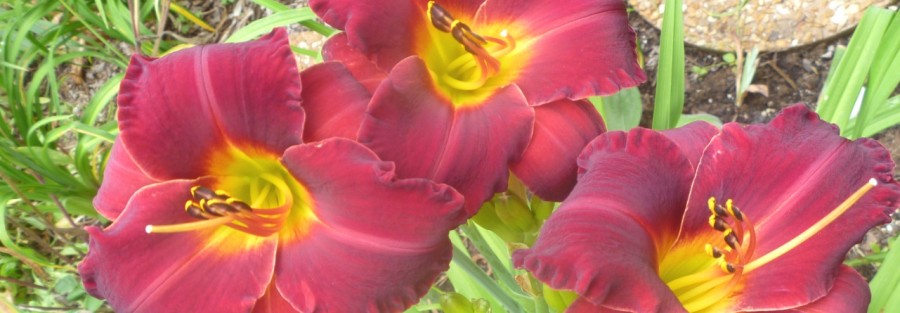
By Webster 1986
 This rich red beauty has a bright yellow throat changing to green deep inside, and the stamens are also bright yellow. It has a nice ruffled edge, a velvety texture that shows purple hews in some light and very heavy substance. The 5″ slightly fragrant blooms start mid-season. A semi-evergreen tetraploid that adds a wow factor.
This plant has large fans so an order will be two fans rather than my normal three.
$14.00
By Winniford 1969
 Bertie is a cute melon colored miniature daylily with an interesting darker orange throat. It starts early and blooms for an extended period. She is a dormant diploid with masses of 2” blooms. It stands only about a foot and a half tall so it’s nice in pots or in the front of the border. She opens well on cold days but reportedly grows well in the south too; a Stout Silver Medal winner.

By Bishop – 1990

Daylily Itsy Bitsy Spider and Red Ribbons
This cute lemon yellow with green throat daylily, has little 3 1/2 inch unusual form blossoms. Meaning, it blooms with narrow petals that are pinched and twisted. A dormant diploid; It blooms early and will rebloom for most of the summer. The foliage mound is low at about a foot but the scapes, at 3 feet, hold the blooms well above the foliage. They are light weight but there are lots of them and they seem to bounce around in the breeze.
This little beauty has won the 2023 Lenington All American Award. This award is given for plants that preform the best over a wide geographic area.
Parentage: Mignon × Suzie Wong

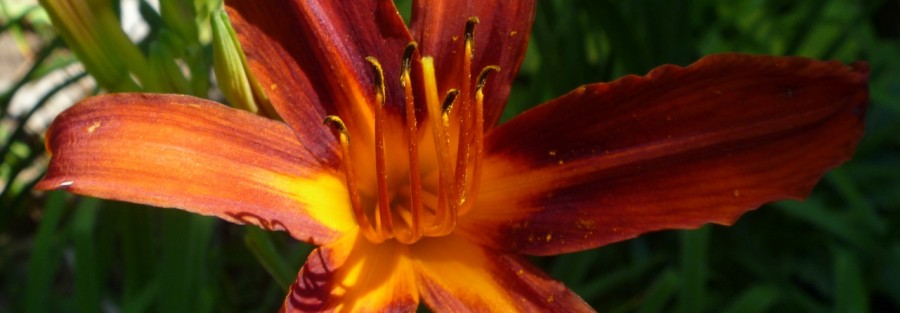
By Russell 1945
 This “old standard” daylily is great for landscaping because it is a very fast grower and a good bloomer. It is a mid-season re-bloomer that is a dormant diploid. The 3″ red/orange flowers have a darker red eye-zone and a gold throat. You will get a larger clump with this plant; at least 5 fans.
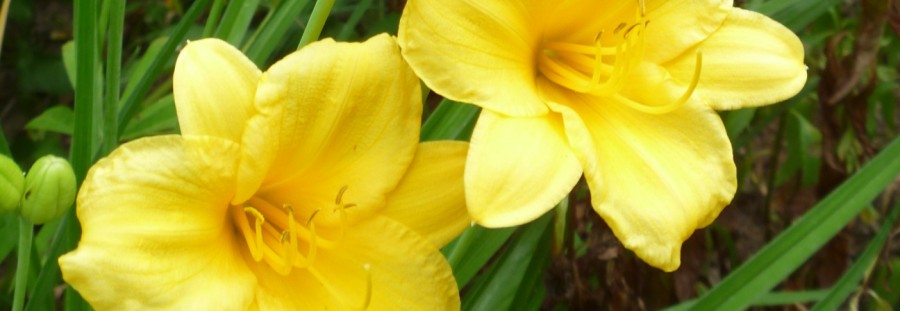

Daylily Stella de Oro
ht. 12″ – zone 3
Early mid-season, re-blooming, extended season, slightly fragrant.
She is a classic and still a great performer.
Bright yellow
dormant, diploid
We also have a clump price for this one.
$4.00

By Williamson – 1936, Dorothy Dietz X Cantabile.
This historic heirloom became popular in the 40’s, and was one of the most popular irises of the time. A beautiful Tall Bearded Iris with snowy white standards that provide a striking contrast to the ultramarine falls. The picture is finished by white piping that brightens the margin. They have a light sweet fragrance when they bloom in early June. Winning the Dykes Memorial medal in 1940 is what really kicked off their popularity. This extremely vigorous variety is great because it will continue to bloom even if it becomes overcrowded. Wabash is from Indiana where the Williamson’s owned the Longfield Iris Farm, in Bulffton Indiana. This Iris is named after the Wabash River and there is a town of the same name. The river was named for the Indian name Wa-ba-shi-ki which means “bright white”. The Iris farm closed in the late 1950’s, but if you are in Indiana be sure to see the Williamson/Cook Memorial Iris garden.
Bright Hour looks a lot like Wabash, but does not have the reddish purple flushing of the foliage at the base.


By Peck – 1971

Siberian Iris Sky Wings
Sky Wings has a gorgeous sky blue flower with a yellow throat topping sword like dark green foliage that remains attractive throughout the growing season and also has beautiful rusty fall color. It is 2 ½ – 3 feet tall and is very hardy (down to zone 2) and vigorous. It prefers moist conditions, but will do fine in average garden soil.
$8.00
Collected in Japan by Barr in 1900.
An oldie but a goodie; this variety has pure white flowers with bright yellow in the throat. They are held high over attractive blue green foliage that is about 2 feet tall. Hardy to zone 4, this variety even looks good in the winter with its rust fall foliage and attractive seed pods. Looks a lot like gulls wing but it is a little smaller both in flower size and height.


Iris Siberian Caesar’s Brother
Siberian Iris are very hardy (zone 3). This one is deep purple and blooms in early June here in Wisconsin. It gets about 3 feet tall and can form large clumps up to 3 feet across. When the clumps get large enough that they start dying out in the middle just do some transplants. They are very tough and can take most conditions including poor dry soil and even boggy conditions, but will do best in moist soil and full sun. Siberian Iris attracts butterflies and they are not favored by deer and rabbits. There are no bugs or disease to worry about with these plants and they remain attractive well into fall and winter. Just cut them down in spring.
$5.00Powered by WordPress & Theme by Anders Norén