

 I got a little carried away with the carrots this year. We had quite a few different colors. The gold and white varieties are pretty but I really like the dark red and purple ones. The have way more beta carotene than a standard carrot, and are simply beautiful on the plate. Having unusual colored veges is always a great way to get people talking at the pot luck too. These are Purple Haze and Sugar Snack Carrots at the peak of the season.
 Carrots are such a fun crop for kids to grow too. They just love all the different colors and are more likely to actually eat them if they saw them being produced.
This time of year all of the best and most beautiful veges are long gone. The sweet crisp, thin skinned carrots don’t store very well, but I still had a bucket of Danvers and Bolero carrots which I grow for eating later in the winter. I do have a root cellar, so that helps. It’s best to store them at a temp from the high 30’s to the low 40’s. The trick is to keep them moist enough so that they don’t shrivel up but not so moist that they rot. I use a mix of half sand half garden soil. Whatever you do don’t wash them before you store them, you can remove the leaves, but don’t cut off the tops and when you bury them in the sand, try to arrange them so they don’t touch. These storage varieties have more fiber and starch but bolero has a thinner core than Danvers, and both of them are great cooked; much better than anything you would get in the grocery store this time of year.
So I dug the last of them out and this is what I made with them. The maple syrup and orange makes up for these storage carrots being a little less sweet. We cook our own maple syrup here in Wisconsin; not for production or sale…yet. We just do small batches for ourselves and for gifts.
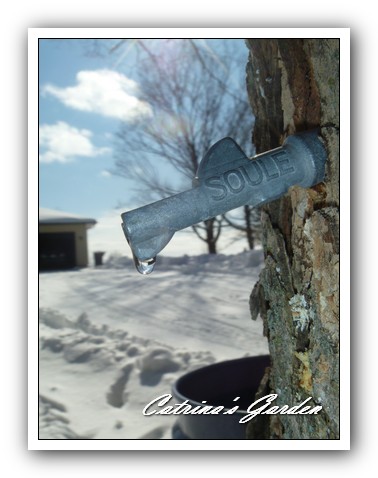 You could use store bought syrup but nothing beats pure 100% maple syrup. Check back for more on “sugarin” in spring.
So here’s the recipe:
Maple Glazed Carrots
½ cup pure maple syrup
1 cinnamon stick
¾ cup orange juice – You can use a little lemon or lime juice in place of the orange if you like it a little more tart
2 oranges or one small can of mandarin oranges
¼ cup water
1 ½ tbsp. cornstarch
1# sliced or diced carrots
1-2 tbsp. butter (you can use olive oil if you are worried about it)
½ cup Parsley (you can use fresh mint too if you have some. Pineapple or other fruit flavored mints are especially good.)
Salt and Pepper to taste
 First make the maple the glaze: Place maple syrup, cinnamon stick, orange juice and oranges in pan and simmer lightly. Break up the oranges with the spatula. In a cup, stir together water and cornstarch until smooth. Add the cornstarch slurry slowly into the maple mixture, and continue to simmer and stir over low heat until it is thickened. This may take a while; be patient and don’t turn up the heat too high. Remove the cinnamon stick and any skins and pith from the oranges.
Sauté the carrots in the butter or oil until they are starting to get soft; how soft is really up to you, I know people who insist that the carrots aren’t done unless they are really soft, I tend to like them a little firmer.
Add the maple glaze, salt, pepper and herbs. If you use fresh oranges you can zest them before you peel them and then add the zest at the end for extra bright citrus flavor. This makes 4 to 6 servings.
Enjoy a taste of summer from your root cellar.


