
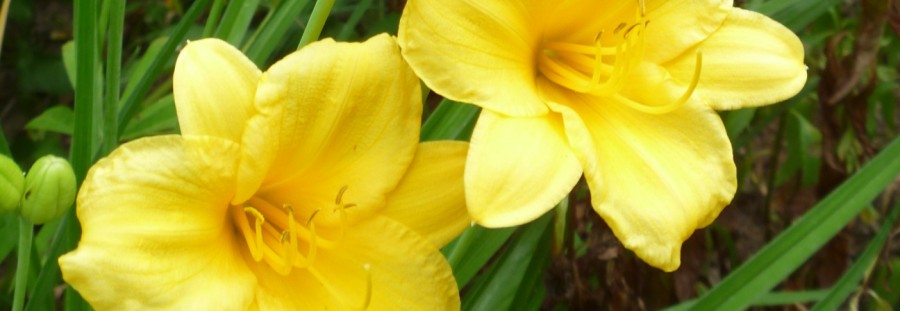
Daylily Stella de Oro
ht. 12″ – zone 3
Early mid-season, re-blooming, extended season, slightly fragrant.
She is a classic and still a great performer.
Bright yellow
dormant, diploid
We also have a clump price for this one.
$4.00

Daylily Stella de Oro
ht. 12″ – zone 3
Early mid-season, re-blooming, extended season, slightly fragrant.
She is a classic and still a great performer.
Bright yellow
dormant, diploid
We also have a clump price for this one.
$4.00

By Williamson – 1936, Dorothy Dietz X Cantabile.
This historic heirloom became popular in the 40’s, and was one of the most popular irises of the time. A beautiful Tall Bearded Iris with snowy white standards that provide a striking contrast to the ultramarine falls. The picture is finished by white piping that brightens the margin. They have a light sweet fragrance when they bloom in early June. Winning the Dykes Memorial medal in 1940 is what really kicked off their popularity. This extremely vigorous variety is great because it will continue to bloom even if it becomes overcrowded. Wabash is from Indiana where the Williamson’s owned the Longfield Iris Farm, in Bulffton Indiana. This Iris is named after the Wabash River and there is a town of the same name. The river was named for the Indian name Wa-ba-shi-ki which means “bright white”. The Iris farm closed in the late 1950’s, but if you are in Indiana be sure to see the Williamson/Cook Memorial Iris garden.
Bright Hour looks a lot like Wabash, but does not have the reddish purple flushing of the foliage at the base.


By Peck – 1971

Siberian Iris Sky Wings
Sky Wings has a gorgeous sky blue flower with a yellow throat topping sword like dark green foliage that remains attractive throughout the growing season and also has beautiful rusty fall color. It is 2 ½ – 3 feet tall and is very hardy (down to zone 2) and vigorous. It prefers moist conditions, but will do fine in average garden soil.
$8.00
Collected in Japan by Barr in 1900.
An oldie but a goodie; this variety has pure white flowers with bright yellow in the throat. They are held high over attractive blue green foliage that is about 2 feet tall. Hardy to zone 4, this variety even looks good in the winter with its rust fall foliage and attractive seed pods. Looks a lot like gulls wing but it is a little smaller both in flower size and height.


Iris Siberian Caesar’s Brother
Siberian Iris are very hardy (zone 3). This one is deep purple and blooms in early June here in Wisconsin. It gets about 3 feet tall and can form large clumps up to 3 feet across. When the clumps get large enough that they start dying out in the middle just do some transplants. They are very tough and can take most conditions including poor dry soil and even boggy conditions, but will do best in moist soil and full sun. Siberian Iris attracts butterflies and they are not favored by deer and rabbits. There are no bugs or disease to worry about with these plants and they remain attractive well into fall and winter. Just cut them down in spring.
$5.00
By Shidara, 1988
Although this is actually a Siberian Iris, it does look like a Japanese iris and is sometimes mistakenly listed as one. The stiff grassy foliage is about 2 feet tall with the 3-4 inch blooms in mass above the foliage in June.

iris siberian rikugi sakura
These beauties are hardy to zone 4 some even say zone 3 and prefer slightly acidic moist soil. They can tolerate wet feet at the edge of your pond, but will also grow in standard garden soil.
The big bi-colored flowers have a wheel like shape to them. There are 6 petals with lavender falls and 3 signals which are also lavender. The center of the bloom is cream to cinnamon in color.
$8.00
By Ensminger – 1990
This little darling has wisteria blue standards and straw colored falls. Brilliant blue beards complete the package. Others say that it is supposed to be 8” but it is 6” tops here in Wisconsin. I thought it was a MDB when I got it. A vigorous grower it won the American Iris Society Award of Merit in 1996.


This MDB (Miniature Dwarf Bearded) Iris is only 3-4 inches high. The falls and standards are both violet purple with white to light lavender beards.
They are soooooo cute and are one of the very first irises to bloom. They will soon be found in little patches all around your yard because they multiply quickly.


By Waite – 1984

Siberian iris laughing brook and Iris Wabash
This Siberian iris can be quite tall in fertile moist soil (up to 3 feet). It will be shorter, but still bloom like crazy, on sandy soils. The electric blue blooms will appear inky in certain light and have a reddish or velvet purple sheen at other times of the day. The signals are white with a distinct black penciling. They are vigorous and floriferous, blooming at the same time as the tall bearded iris. The sword like dark green foliage remains attractive long after the blooms fade and even becomes a rusty accent for the winter garden.
$7.00

Iris versicolor with Hosta Elvis Lives and Golden Prayers
A very robust, native water iris which will also grow in the garden if given enough water. The sword-like leaves are topped by large, violet-blue flowers accented by whitish markings at the base of the sepals. Petals and sepals spread out flat making it an attractive place for feeding by hummingbirds. It can grow to 3 feet in the water but will be shorter in a garden situation. They are hardy to zone two and can tolerate freezing in the ice with no problem. They like about six inches of water, but can tolerate deeper water for a short time.
 $7.00
$7.00
Powered by WordPress & Theme by Anders Norén