A place for gardeners, foodies and garden inspired artists.

Tag: Historic Page 3 of 4

Hosta Paradigm

By Walden/West – 1999

Hosta of the year in 2007; this beauty really is a good example of a model perennial.  ‘Paradigm’ comes from the Greek word paradeigma, which means “pattern”, “example” or “model.”  It also won the Alex Summers Award in 2010.  A large hosta at 20” with 2 foot scapes it is a bright gold with blue margins and can spread to 3 feet wide when mature. It is a sport of Abiqua Recluse (H. White Vision x Sum and Substance). The glossy leaves intensify in color as the season goes on and it is moderately corrugated with really heavy substance. A wonderful specimen it is topped with lavender flowers in midsummer.

$15.00
Quantity:  

Hosta Lancifolia

Engler 1888/AHS 1993

Hosta Lancifolia

Hosta Lancifolia

This is the old standby. We call it “Joe Hosta”. Soon you’ll be giving shovels full of it to your friends, because it increases rapidly.

‘Lancifolia’ was the first hosta introduced to Western botany. No one really knows where it originally came from but it showed up in 1692 by Kaempfer and then was taken to Holland in 1829 by Von Siebold. It is thought to come from the sieboldii line.

Mature plants are 2 feet across, a foot tall and mound shaped.

The lance-shaped leaves are about 5” x 3” and are smooth and a shiny. The top surface is a medium green and the underside is a glossy lighter green. The undulated leaves have 5-6 veins. The green scape has reddish dots on it.

The funnel-shaped violet flowers are striped. They bloom late, and are sterile. The plant looks similar to forcathayana which is fertile.

‘Lancifolia’ is both sun and drought tolerant but prefers light shade. Lancifolia is one of the first hostas to come up in the spring and one of the last to go dormant, making it one of the most reliable ground covers around. It is sometimes found under the names ‘Saji Giboshi’ or ‘Koba Giboshi’.

You will get plenty of extra eyes with this one.

$5.00

Quantity:  

Hosta Ellerbroek

Hylander/AHS 1987

Hosta Fortuni Aureomarginata aka Ellerbroek

Hosta Fortuni Aureomarginata aka Ellerbroek

This sport of fortune Hyacinthina was originally from Germany but is now one of the most popular hostas anywhere. This is because of its rapid growth and lack of problems.

It has dark green leaves with a crisp gold edge and will take some sun and hold its color even in very hot weather. The leaves are 10” x 8” and oval, coming to a point at the end. The have a matte finish and recessed veins.

The flowers are lavender on 2 foot scapes in late July and August.

The plant that can be 2.5 feet across and 1.5 feet high and it has a classic mounded form.

Ellerbroek sometimes goes by other names like Aureomarginata, Gold Crown and Yellow Edge.

$7.00

Quantity:  

Hosta Hyacinthina

By Siebold (discovered), Hylander (named as a species in 1954), Schmid (registered as a cultivar in 1987)

Hosta Fortunei Hyacinthina

Hosta Fortunei Hyacinthina

‘Fortunei Hyacinthina’; sometimes just called ‘Hyacinthina’, is a hosta that has produced more sports than any other. It has been around awhile, so is also one of the most used hostas of all time in its own right. Fortuni was changed from a species to a cultivar when it was discovered that many of the plants that were in the fortune species were unrelated. It is very dark green to a little blue, slightly glaucous, and silver grey underneath. It is fertile and holds lavender flowers on 30” scapes. This hosta quickly forms a mound that gets 1 1/2’ tall and 2-3 feet wide. The leaves are about 9 by 7”.

$7.00
Quantity:  

Hosta Bressingham Blue

Alan Bloom 1943

A sieboldiana hybrid from England with very large heart shaped cupped and puckered leaves.

The blue foliage is finely ribbed.

It has 36” scapes bearing near white flowers. Best if well watered. An old fashioned Blue.

The large clumps can be more than 3 feet across and 2 feet tall. The heavy leaves are slug resistant.

$15.00

Daylilly Sammy Russell

SORRY, WE NO LONGER HAVE THIS PLANT.

By Russell – 1951

Daylily Sammy Russell

Daylily Sammy Russell

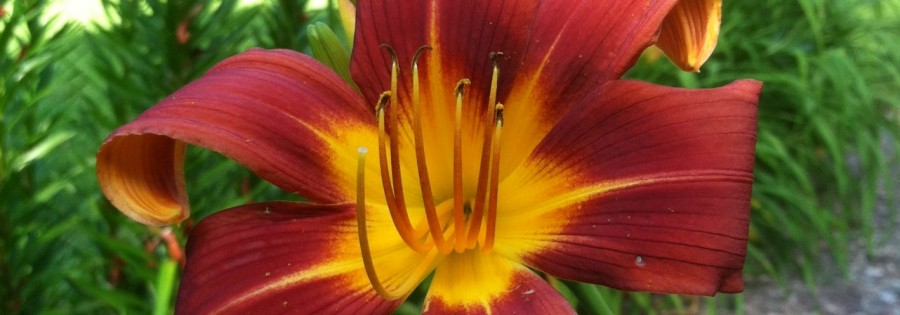
This heirloom daylily is a late blooming dormant diploid. It is brick red with a gold throat that extends out, star-like, onto the mid-ribs. Give this fast grower some space or it will grow into the one you planted next to it.  Though not a true spider the 4 inch flowers do have a spidery form with thin petals. The plant stands about 2 ½ feet tall.

Looks like you have entered a product ID (84) that doesn't exist in the product database. Please check your product ID value again!

Daylily Sail On

SORRY WE NO LONGER HAVE THIS PLANT.

By Claar-Parry – 1964

Daylily Sail On

Daylily Sail On

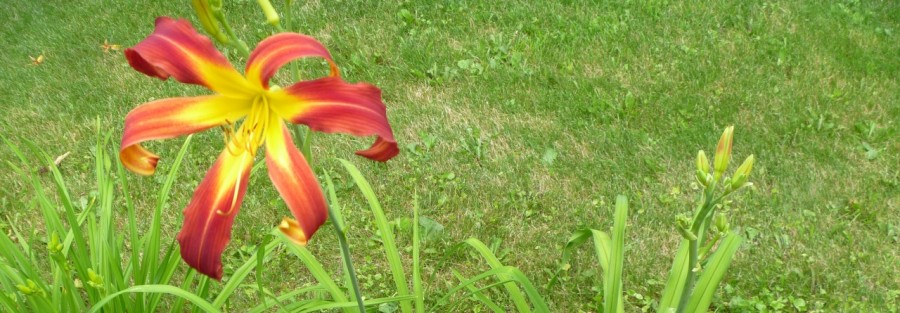
This daylily looks “spider like” but the petals are not long enough to truly be classified as a spider. The flower opens and the narrow petals curl back (see picture). This dormant diploid is red with a large gold throat and mid-ribs. He is a mid-season extended bloomer that is 34” tall with a 5” flower.

Looks like you have entered a product ID (82) that doesn't exist in the product database. Please check your product ID value again!

Daylily Red Ribbons

By Lenington – 1964

Daylily Red Ribbons

Daylily Red Ribbons

These deep ruby red spiders do look like ribbons at 8” with a ratio of 4.7:1. They are super-tall.   Big long buds held on 40” stems.  Though they are an evergreen diploid they do pretty well here in Wisconsin. The star like, warm gold center really shines. The petals curl back nicely and sometimes the gold extends down the mid-rib or as a thin line along the edges.

$10.00
Quantity:  

Daylily Ralph Henry

By Hall – 1964

Daylily Ralph Henry

Daylily Ralph Henry

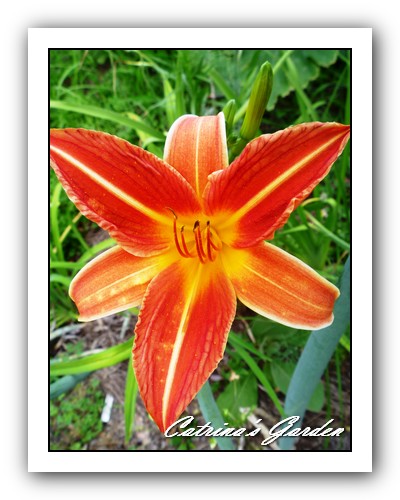
A peachy orange daylily with a raised cream mid-rib and cream around the edge of the lower petals. The dormant diploid plant is 20” with 5” blooms.  This is not the same as “Siloam Ralph Henry”. It is just “Ralph Henry”. Yes, there are 2 of them and the Siloam daylily of the same name is very popular while this one is rare.

$6.00

Daylily Kindly Light

By Bechtold 1949

30″ tall with a 8″ flower – zone 3.

A midseason, extended bloom plant, very reliable.

This was my first spider and still one of my favorites.

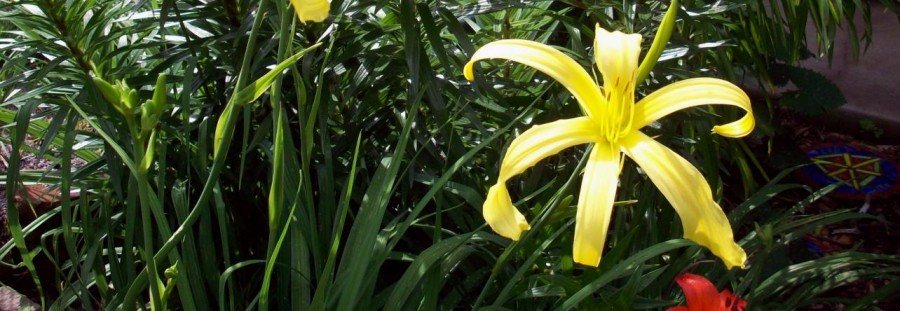
Lemon yellow spider.

Dormant, diploid.

$8.00
Quantity:  

Page 3 of 4

Powered by WordPress & Theme by Anders Norén