Commonly called Beardtongue, this native plant is a perennial that is fully hardy to zone 3. Mature plants can be 2 feet tall and a foot and a half across. The shiny leaves are dark green/maroon and the undersides are fully colored maroon, as are the stems and flower stalks. It holds its color long into fall, after most things have gone dormant. The beautiful upright stems of lipped, tubular flowers are white to very light pink. Husker’s Red blooms in April to June and then re-blooms until frost if cut back when the first stalks start to go to seed. The white flowers have high contrast with the foliage so the plant is ideal for the moon garden. The plant has the best foliage color, and blooms best, in full sun, but it can take some shade. It’s super easy to care for, just remove old foliage in spring and cut off seed heads in fall if you don’t want self-sowing. It has many other benefits including being deer resistant, drought tolerant once established, and attractive to bees, birds and butterflies. Being the Perennial Plant Association Plant of the Year in 1996 is what brought this plant into the public eye and into our gardens. Penstemon means five stamens in Greek.
$7.00Tag: Pink Page 4 of 5
This Lupine is native to western Canada and north western US. It was hybridized by Russell in the 1930’s by crossing with other species to get a wide range of colors, the Russell lupine is not the same as the plant that I have. The selection that I’m offering is mainly purple, but I occasionally get different shades of pink. Lupines prefer cool moist conditions, full sun to part shade. The flower spikes are 3-4 feet tall, rising above a cluster of compound palmate leaves. This plant is perennial and can live for many years in the right conditions. Although they do need moisture, they do best in a sandy soil. Here’s another benefit of the lupine; because they are in the pea family they fix nitrogen and can improve dry sandy soils. Some say that these plants don’t transplant well. I find this to be untrue. Small plants do very well as long as they are watered frequently after planting. Lupines are poisonous to livestock, but this is a benefit to those of us living in the woods, since deer won’t touch them. Lupines flower in response to day length which is why they bloom earlier, the farther north you are…interesting.
One order consists of multiple one year old plants or one two year old plant. You may specify which you prefer.
- Lupine
Bleeding heart has attractive mounded foliage with arching stems of delicate, heart-shaped flowers in spring. It thrives in moist woodland gardens along with ferns and other shade-lovers. They are deer resistant and this is the old fashioned variety favored for cottage gardens that has pink hearts and white teardrops falling from them. The plant is ephemeral which means that the foliage will die back after they flower and reappear the next spring. You may notice seedlings; transplant them to a desired spot.
$7.00
Vibrant pink feathery flower spikes appear from June thru August. You can cut them and hang to dry for arrangements. Glossy deep green foliage is deeply cut and very graceful. The stems are also pink. This tough hardy perennial is not bothered by pests or disease. Leave seed heads standing for winter interest. Prefers part shade with loamy moist soil, but can be grown in sun if it is watered enough. The plant is 2 feet tall with an 18” spread. It attracts butterflies and humming birds and is resistant to rabbits and deer.
- Hosta Pilgrim, , Shade Fanfare, Astilbe Glut, Heuchera Silver Scrolls
Dian jiu is the name this cute little allium goes by in China.
These alliums are perfect for the sunny rock garden or anywhere where tall plants will not shade them. They flower best in full sun.
The dainty rose colored flowers appear in mid-summer. The 4” tall foliage looks like miniature chives and tastes mildly of onion.
- Packerland Sedum, Pink alliums Mairei, Janes Sedum and dragon’s blood sedum
Allium amabile may be the same plant.
This native of china was originally found in alpine meadows. Hardy in zone 4 so long as the soil is well drained in winter.
By Spalding – 1975
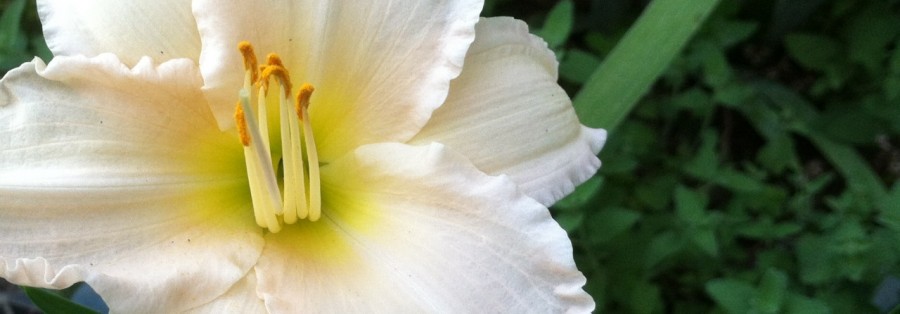
At 20 inches tall, this re-blooming miniature is a nice early bloomer for the front of the border. Also an extended bloomer, it just keeps going with pale pink/near white 3 inch flowers that are held above the foliage. They are slightly fragrant with a ruffled edge, a diamond dusting and a green throat. A 1998 All-American Daylily Selection, this beautiful baby also holds awards. It won the Lexington All American Award, the Award of Merit and the Annie T. Giles Award for Best Small Flower.
$7.00
By Stamile – 1989
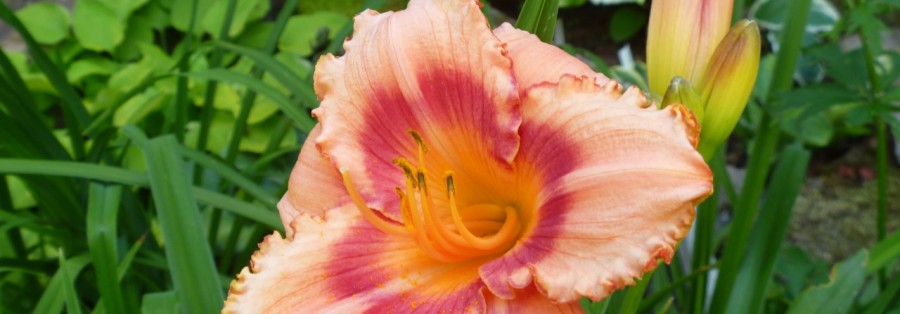
Strawberry Candy is peachy-pink with a rose eye-zone and a gold throat. The ruffled pie crust edge is also rose in color. It is 26 inches tall and the blossoms are 4 ½ inches. The blooms start early, mid-season and then it just keeps going. It is a semi-evergreen tetraploid and here is the parentage (Panache × Tet. Siloam Virginia Henson). This has been the second most popular daylily to Stella de Oro for a long time. Its reliability and foliage that does not fade, even in drought, helped it become the Winner of numerous awards including the Stout Medal, daylily’s highest award.
$10.00
By Guidry – 1986
Smokey is a poly-chrome blend of rose, pink and apricot bursting from the throat. It is ruffled and perfectly formed with more rose on the ruffled edge and seen as streaks on the petals. It is a dormant, diploid and at 18 inches, it can be placed near the front of the border. Though it is not very tall I would not call it a mini because the flower is nearly 6 inches. Another benefit is that it is an early re-bloomer so it will help fill in the lull after the irises stop blooming, and then continue into the main daylily season. It is a winner of the Lenington All American Award given to daylilies that perform well in any climate, and the good news just doesn’t stop. Smokey also won the Plouf Fragrance Award.
$12.00
By Henry – 1982
This cute mini would be perfect for a shower gift. It works great at the front of the border being only 15” and lots of 2 1/2 “blooms just keep coming. A dormant diploid starts early and continues into the mid-season. The little flowers are pale pink with a rose eye-zone and a gold throat.
By Hall 1954
36″ tall and bloom size 4.5″ – zone 3.
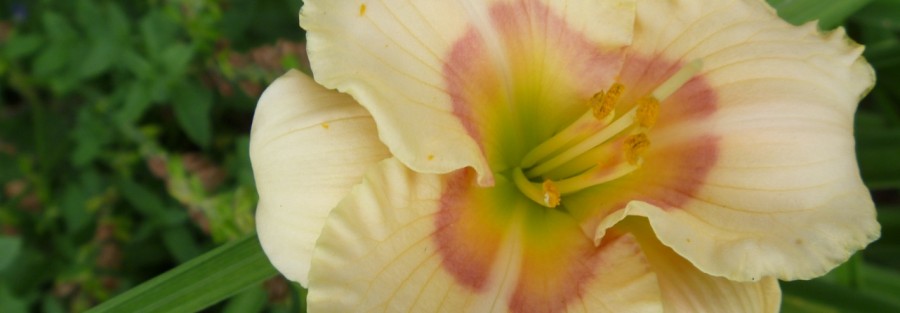
Early Mid-season, bi-color; yellow petals alternate with rose petals that have a yellow mid-rib. The throat is bright lime green/yellow.
This is the true Magic Dawn, not the darker one which was mixed up with it long ago and is now often sold commercially.
Dormant, diploid