By Weiler – 1990
Standard Dwarf Bearded (SDB); 8-12 inches tall; zone 3
This blue violet darling has slightly deeper blue violet beards.
Multiplies quickly and has a sweet fragrance.
-

- Iris SDB Flower Shower


By Weiler – 1990
Standard Dwarf Bearded (SDB); 8-12 inches tall; zone 3
This blue violet darling has slightly deeper blue violet beards.
Multiplies quickly and has a sweet fragrance.


By Dean – 1993
This standard dwarf bearded (SDB) iris is very difficult to describe…you really need to look at the picture or better yet see it in person. It is lavender, cream and tan or straw colored all kind of blended together with very dark purple shooting up from the base. The sky blue beards top it off with a stunning yet calming result. At 12 plus inches, she is tall for a SDB. With a wide flat form, the standards form a ball, while the falls don’t fall, they are held straight out to the side.


This Lupine is native to western Canada and north western US. It was hybridized by Russell in the 1930’s by crossing with other species to get a wide range of colors, the Russell lupine is not the same as the plant that I have. The selection that I’m offering is mainly purple, but I occasionally get different shades of pink. Lupines prefer cool moist conditions, full sun to part shade. The flower spikes are 3-4 feet tall, rising above a cluster of compound palmate leaves. This plant is perennial and can live for many years in the right conditions. Although they do need moisture, they do best in a sandy soil. Here’s another benefit of the lupine; because they are in the pea family they fix nitrogen and can improve dry sandy soils. Some say that these plants don’t transplant well. I find this to be untrue. Small plants do very well as long as they are watered frequently after planting. Lupines are poisonous to livestock, but this is a benefit to those of us living in the woods, since deer won’t touch them. Lupines flower in response to day length which is why they bloom earlier, the farther north you are…interesting.
One order consists of multiple one year old plants or one two year old plant. You may specify which you prefer.


By Wilson/Oakes – 1987

Daylily Wilson’s Spider
 Yes…a classic spider that is violet with lots of cream on the lower petals as well as cream mid-ribs on the upper petals and a chartreuse throat. A 28” tall dormant diploid; it has 7 1/2“ flowers with a ratio of 4.60:1.

By Moldovan – 1984

Daylily Strutter’s Ball
This black-purple beauty opens a multitude of wide 6 inch flowers on a 30 inch tall plant. It is a mid-season bloomer that just keeps going and going due to a very heavy bud set, and the fact that it is a vigorous dormant tetraploid.
$10.00
By McRae – 1992

Daylily Star of Fantasy
Hmmm…how to describe “Star of Fantasy”; it has a large yellow star in the center that is the throat. The star effect continues as bright white mid-ribs extend out into a triangle shaped plum eye-zone. Then the rose/violet spidery petals stretch out, again in a triangle shape. The top petals are much larger than the lower petals, which have some lilac at the ends but are mostly reflections of the yellow cream throat. This dormant diploid is fairly tall at 30” and the 8 ½” fragrant spider flowers seem to hang right at nose height. Petal length to width is 4 1/2.0:1
Parentage: seedling X snickerdoodle.
$12.00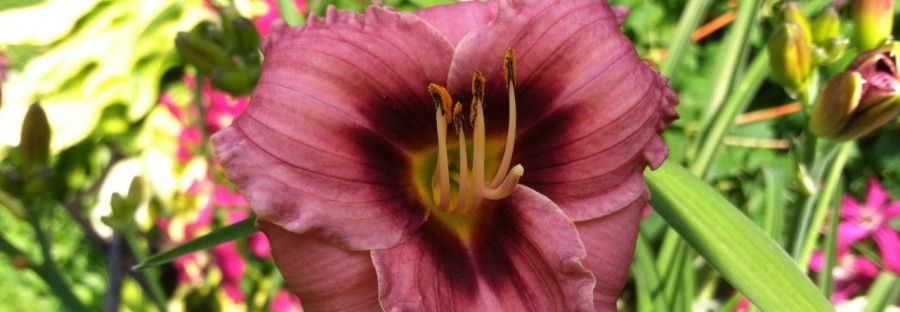
By Henry – 1981

Daylily Siloam Tiny Tee
A small plant at 20” you will get a bunch of 3” flowers, blooming heavily mid-season. The lilac flowers have a very dark purple eye zone and a green throat. The perfectly formed blooms are round and a little ruffled with recurved petals.
$8.00
By Moldovan 1990

Daylily Salieri
30″ ht.5″ flowers – zone 3
Very dark purple with a darker eye zone.
Dormant, tetraploid
Early with extended bloom.
Not the darkest of the darks, but one of the most reliable bloomers.
By Degroot – 2000

Daylily Purple De Oro
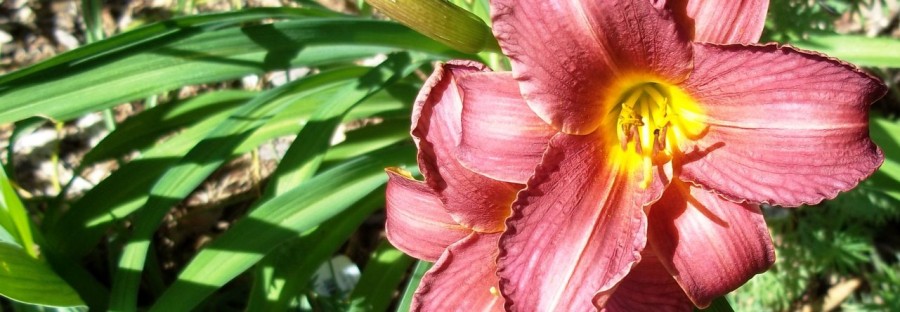
The ‘de Oro’ in the name makes you think this will be a good performer and it does bloom throughout the season. A dormant diploid; it will grow as quickly as your Stellas. With blooms only 3” it could be called a miniature daylily, but the mass of plum purple with yellow throats does not seem little. There is some streaking in the veins and the edges are slightly ruffled. A compact plant at only 20”…enjoy.
$5.00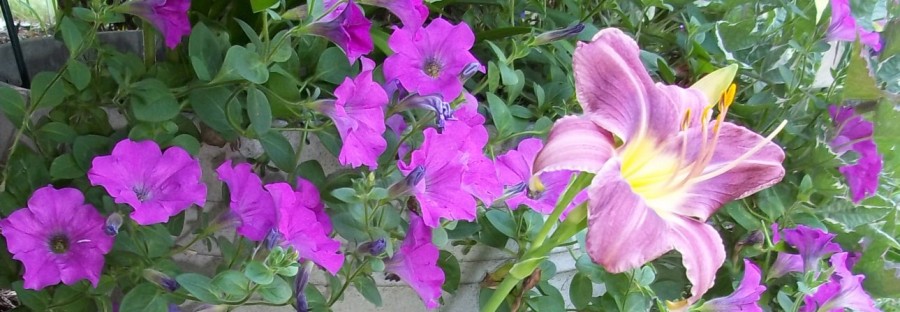
By Marsh – 1970
This daylily is a lovely shade of blue violet with blending to a little darker shade just before turning white; and then the golden throat starts. There is also a cream to white midrib and along the edge. The plant is 28” with 5” flowers. A semi-evergreen diploid that is a mid-season bloomer; the blue is really more in the eye-zone and how vivid it is can vary with conditions.
Parentage: (Prairie Hills x Lavender Flight)


Powered by WordPress & Theme by Anders Norén